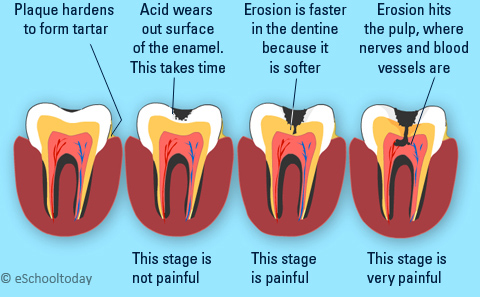
Bacteria can live in your mouth in the form of plaque, causing cavities and gingivitis, which can lead to periodontal (gum) disease. In order to keep your mouth clean, you must practice good oral hygiene every day.
What is plaque?
Plaque is a sticky layer of material containing bacteria that accumulates on teeth, including where toothbrushes can't reach. Many of the foods you eat cause the bacteria in your mouth to produce acids. Sugary foods are obvious sources of plaque, but there are others that you might not realize can cause harm. Starches—such as bread, crackers, and cereal—also cause acids to form. Plaque also produces substances that irritate the gums, making them red, sensitive, and susceptible to bleeding. This can lead to gum disease, in which gums pull away from the teeth and form pockets that fill with bacteria and pus. If the gums are not treated, the bone around the teeth can be destroyed and teeth may become loose or have to be removed.

How do I brush and floss my teeth?
The American Dental Association recommends the following techniques for brushing and flossing your teeth:
Brushing
• Place your toothbrush at a 45-degree angle against the gums.
• Move the brush back and forth gently in short (tooth-wide) strokes.
• Brush the outer tooth surfaces, the inner tooth surfaces, and the chewing surfaces of the teeth.
• Use the tip of the brush to clean the inside surfaces of the front teeth, using a gentle up-and-down stroke.
• Brush your tongue to remove bacteria and freshen your breath.