Showing posts with label gum disease. Show all posts

Monday, November 4, 2013

How to Prevent Gum Disease

As strange as it seems , some people think that chewing gum causes gum disease. However, gum
disease comes from plaque and calculus. Plaque is a soft material that is made up of bacteria and food debris that is scraped off by your dental hygienist and daily brushing. When the plaque is not removed though, minerals carried in saliva interact with it and the plaque hardens and turns into calculus. Plaque and calculs can cause decay in teeth and irritate your gum tissue resulting in gum disease.

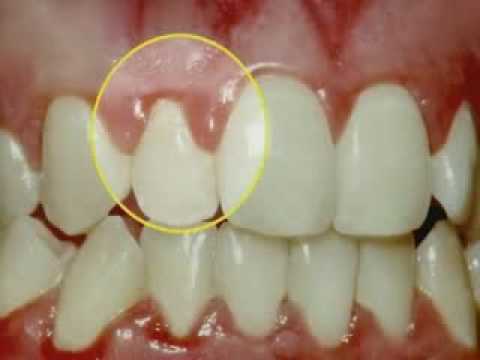
Dentists call  gum disease periodontal disease: periodontal disease: perio means gums and dontal refers to teeth. This disease affects the gum tissue and is characterized by irritation and redness. When gum disease advances unchecked it affects the bone and ligaments that hold a tooth in place. Gingivitis is the early stage of periodontal disease, and its signs include redness, slight swelling, and bleeding after brushing or flossing. When gingivitis is left untreated it causes the gum to begin receding, or pulling away from the tooth, as which point the gum disease is classified as periodontitis When the bone and ligaments become infected and inflamed, the gum disease is referred to as advanced periodontitis. Bleeding and swelling of the gum tissue, pain pus, halitosis, and loose teeth are the signs of this advanced stage of gum disease.

Thursday, July 18, 2013

What is Periodontal Disease?

What do you mean my gums have a disease?
Periodontal disease is the last thing you want to hear about when you visit a dentist, but believe it or not he hears those words almost every day. Luckily, unlike the Ebola virus, gum disease is entirely preventable, and in the long run treatable.


What Causes Periodontal Disease?
Gum disease isn't a disease as you immediately think of it. You aren't walking around, flossing your teeth at the mall, when someone coughs periodontal disease into your face. It's more of a case of lack of maintenance, like when you go 10,000 miles without changing the oil in your car on a regular basis. You see, our mouths are filled with millions of microscopic bacteria swimming around. These bacteria are mostly beneficial, but when combined with mucus and other gunk in our mouths they harden to form plaque. We brush and floss our teeth to remove that plaque, and start the process all over again. Of course, sometimes we miss a spot, and some people fail to brush at all. When the plaque hardens, it causes gingivitis, which is a fancy word for "my gums are red, swollen and bleed a lot." Gingivitis, you might say, isn't a big deal. With regular flossing and brushing as well as attention from a dentist, it will be a thing of the past. If left alone, on the other hand, it will become extremely hard and thick. The gums, knowing that gingivitis is gross, will begin to pull away from the teeth. Retreating, if you will.

Who needs those cowards anyway, right? Well, unfortunately your gums are protecting the air pockets around the roots of your teeth. Those formerly helpful bacteria now invade the air pockets, causing infection and pain. Eventually, the process will rot away at the root of the tooth, causing them to fall out. If your mouth were a car, I'd say it's time to take it in to the dealership.

Wednesday, July 17, 2013

Frequently Asked Questions about Dental Hygiene

Here are some commonly asked questions many dentist get asked everyday about dental hygiene.  If you do not see a dental question you have, please feel free to add a comment with your question and we'll do our best to answer it for your.

1.) What causes Tooth Decay?
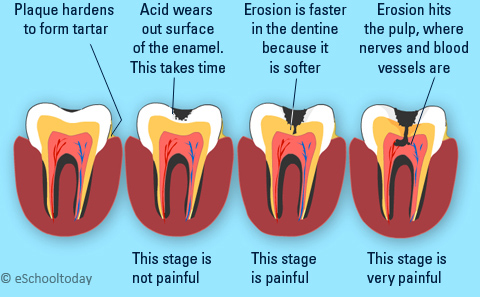
Sugar in foods and drinks turns into an acid in your mouth.  The acid can burn a hole in your tooth which is the start of tooth decay.  Plaque is a sticky paste found on teeth.  Plaque is made by tiny living things called bacteria.  The bacteria in plaque feed on sugar that clings to teeth.  Plaque contains an acid that can make holes in teeth.

2.) What happens with a tooth decays?
If tooth decays reaches the center of a tooth, it causes a terrible pain.  The tricky thing about tooth decay is it does not hurt until it reaches the center of the tooth which is too late.  Nerves are located at the center of the tooth and they are responsible for letting you know you have a cavity.  When the decay reaches the nerves, the tooth throbs with pain and you need to see a Lone Tree dentist to treat the pain.


If tooth decay is not treated, the tooth will die and turn brown.  If a tooth is badly damaged by tooth decay, it may have to be pulled out.  If someone loses a permanent tooth, it will need to be replaced with a false tooth.